Called to Witness, Not Bitterness
by Aaron Abramson, Executive Director and CEO | January 26 2026
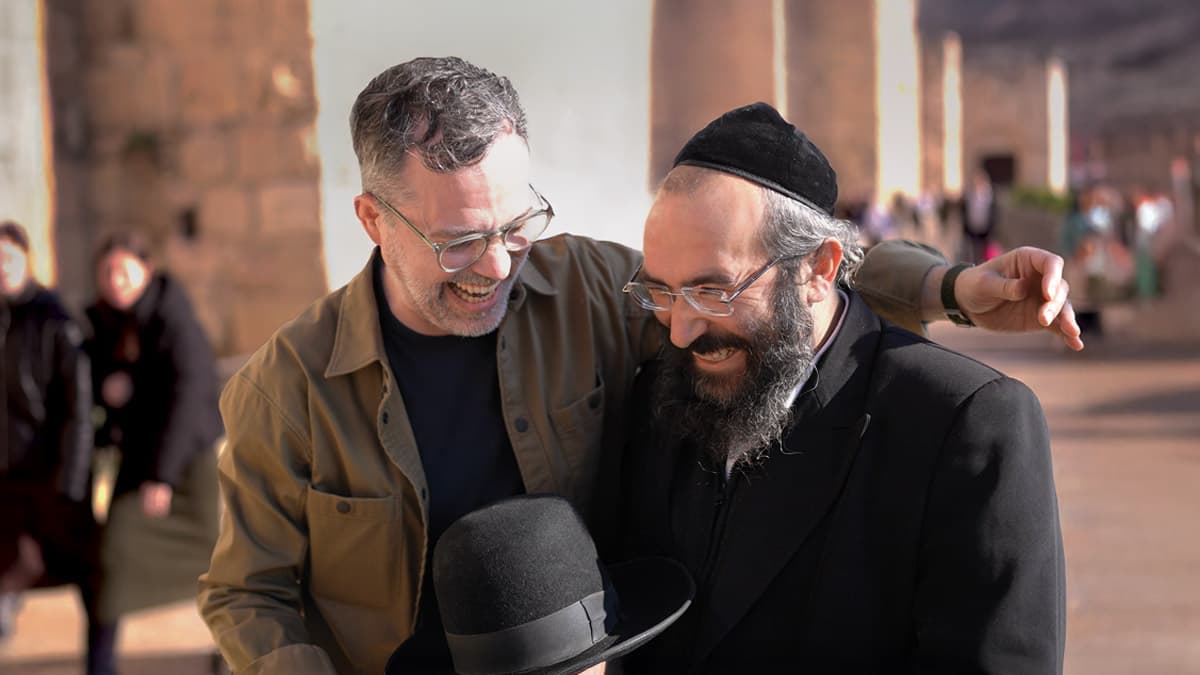
A few months ago, I spoke at Urbana, InterVarsity’s global missions conference. I shared the platform with my friend Fares Abraham. Fares is a Palestinian, a Christian leader, and founder of Levant Ministries. Standing on the stage with him was one of the most meaningful moments I’ve had so far as CEO of Jews for Jesus. Here’s why.
Fares and I have both suffered terrible losses due to the conflict between our peoples. We have both experienced the pain and fear that our two communities have carried for generations. We do not agree on all the reasons for it or how it can or should be resolved. Yet, we love each other as brothers in the Lord, and we care deeply about one another’s communities.
We stood on that platform together because we see what Jesus sees on both sides of this conflict: people who desperately need the hope of the gospel. More than anything, both of our communities need to experience God’s transforming love and forgiveness so they can love and forgive one another.
Side by side, Fares and I could show these Christian college students the power of the gospel in a far more powerful way than either of us could have done alone. Together, we brought an important counterpoint to the outrage over the recent war between Israel and Gaza that fills today’s headlines. That outrage is contagious. It pressures these students to choose who deserves their compassion and who deserves their contempt. Fares and I challenged them to look beyond the destructive patterns of polarization. It’s hard to go against the flow, but we can always find help in God’s Word.
For example, we see in the book of Joshua:
When Joshua was by Jericho, he lifted up his eyes and looked, and behold, a man was standing before him with his drawn sword in his hand. And Joshua went to him and said to him, “Are you for us, or for our adversaries?” (Joshua 5:13)
But the “man” replies with a word that overturns and reframes Joshua’s question:
And he said, “No; but I am the commander of the army of the LORD. Now I have come.” And Joshua fell on his face to the earth and worshiped and said to him, “What does my lord say to his servant?” (v. 14)
Once Joshua realized whom he was speaking to, the real question was not whether he was on Joshua’s side, but rather how Joshua would submit to God’s mission for his life.
Our calling is not to sort everyone into categories of friend or foe. Our calling is to humbly hear and carry out God’s mission. And on this side of Calvary, that means doing our best to participate in Jesus’ Great Commission and to share his heart to seek and to save the lost. That can often feel like an uphill battle.
Our calling is not to sort everyone into categories of friend or foe. Our calling is to humbly hear and carry out God’s mission.
Since the horrific news of the terrorist attack on Israel on October 7, 2023, we’ve been flooded with countless images and conflicting reports that have generated a steady stream of bitter accusations and fear. It’s natural to absorb the bitterness of one side or the other. But we can break the cycle of bitterness by remembering that in the middle of all this darkness, God is still working. Our missionaries in Israel have watched him soften hearts among Jewish people in ways I can only describe as miraculous. Fares has seen him moving among Arab communities with the same power and tenderness.
When we share our stories, we realize that what the world describes only in terms of conflict, God approaches with compassion. And what the world sees through the lens of enemies and opponents, God sees through the lens of redemption. The world uses fear and bitterness to manipulate people’s views of one another. Yeshua calls us to something better. He calls us to something deeper. He calls us to love the ones who frighten us. Fear always dehumanizes; the gospel always rehumanizes. “Perfect love casts out fear” (1 John 4:18).
The question is not which news source we trust or which side deserves our compassion or contempt. The question is whether we will be faithful to bring the message of salvation to those who desperately need it.
The question is not which news source we trust or which side deserves our compassion or contempt.
That was the heart of our message to the students at Urbana, and I wanted to share it with you as well. If your heart breaks for Palestinians, for Israelis, or for both, ask God if he is calling you to help bring them the hope of the gospel. God is at work in both these communities, and you can be a part of it.
In this newsletter, you will read about a Muslim woman who recently came to faith at our women’s shelter in Tel Aviv. When she walked through the doors of our shelter, she was exhausted and deeply skeptical. She had endured abuse and exploitation. Yet, through the love of our staff, the peace she saw in the believing women around her, and the kindness of the Lord, she met Jesus. One encounter with him healed what years of trauma could not. She now calls him Savior. That is the power of the gospel. That is why we go. Thank you for your prayers and support to help us do that.
I’d like to offer a word of encouragement to you as you navigate the pervasive suffering in this world as well as your own personal challenges. We are all tempted at times to be bitter over things that might never dominate headlines yet still threaten to dominate our hearts. Anger and sadness are natural responses to suffering, but bitterness is optional. Bitterness blinds. It blinds us to the image of God in the people we disagree with. It blinds us to our calling.
We cannot control the world stage, but we can be faithful witnesses in the middle of it. We are not called to wring our hands. We are called to go. Go to the brokenhearted. And if you cannot go far, then go near. Go to your neighbors in your own city. Someone near you is hurting, afraid, lonely, or confused. Will you bring them the gospel? God bless you as you go.
There’s more to see and pray for!
Related Articles