
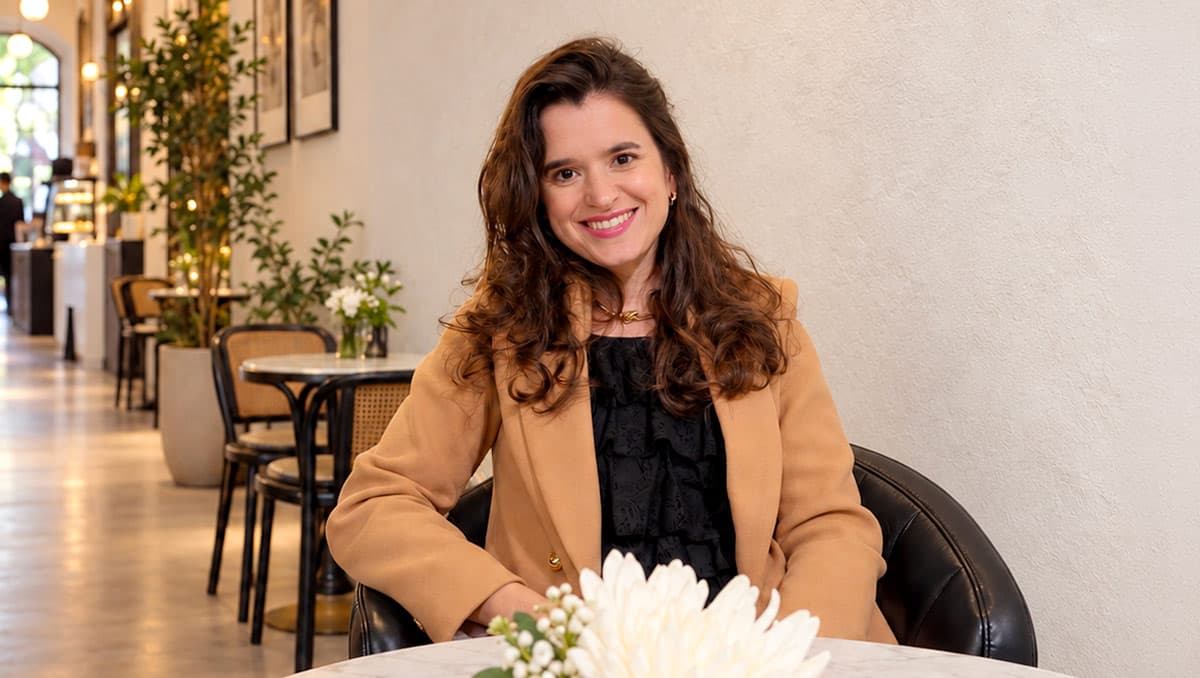
Are You Real, God?
It wasn’t enough to just believe; I wanted to actually find him.
by Regina Lajst Schechtmann |
When I was young, I asked my mother about God, and she said, “If God is real, then where was he during the Holocaust?”
But you can’t talk about our holidays, you can’t tell the Jewish story, without talking about God. From Passover to Purim, the history of Israel is all about the God who had a plan for the Jewish people, the God who provided for the Jewish people.
The question I asked my mother had no easy answer. The Holocaust was the reason why my family had left Europe and landed in Brazil. My grandfather, Chaim Lajst, was a survivor of what became known as the Sobibor uprising.1 He alone among six siblings survived. My grandmother’s family managed to move to Brazil before the Nazi persecution began.
To my family, God might be real—but if he was, he had left us long ago.
Still I wondered: “Who is this God, the God of my ancestors, the God we read stories about on Shabbat?” If he was real, I wanted to know him.
So I searched for God on my own terms. I went to Israel with Birthright (a trip for young Jewish people), but while I was there, I couldn’t really engage with my peers. They wanted to go out, and I wanted to talk to the rabbis. I pestered them with questions like, “Where is God? Who is this Messiah? How do I connect with him?”
The rabbi told me, ‘Talk to God in your own words.’
They urged me to come back again and attend a girls’ yeshiva (Orthodox Jewish seminary). So I did. Sometimes I would watch my roommates in their prayers. They seemed content with the quietness and sameness of our daily prayers. But me—I felt almost more agitated after going through the routine. When I pray, I expect an answer. It’s not that God has to respond the way I think he will—it’s just that if I’m talking to someone, I want it to be an interaction.
The rabbi told me, “Talk to God in your own words.” So I went to the Kotel (the Western Wall) as so many others have done. I thought that maybe I would find the God of our stories there. That God spoke to Moses as a man speaks to a friend: face-to-face. Yet even at the Kotel, I didn’t feel him speaking to me. When it was time to return, I came home dissatisfied—with so many questions still unanswered.
So, in São Paulo, I lived among the Orthodox and observed the traditions with them. And yet I felt like it was never enough. When I was out walking and ran into a former professor, I asked her to get a coffee with me. We sat together and she told me, “Oh, I love the Jewish people.” And I thought, “Are you sure you are a Christian?”
For me, what the Christian gospel meant was condemnation of the Jewish people. Not just the Holocaust (as if that weren’t enough) … but before that, the pogroms, the forced conversions. They blamed us for the death of Jesus. The word “gospel” meant pain for my people.
I asked God to accept the prayer but cancel out the name of Jesus.
But then this English professor who claimed to love my people offered to pray for me. (I would find out later that while we were in different countries, she’d already been quietly praying for me—for two years!) I wanted prayer, but I knew she would pray in the name of Jesus, and that would bring condemnation on me—it would be a betrayal of my people. So in my heart, I asked God to accept the prayer but cancel out the name of Jesus.
But when she started to speak, I forgot all my worries. How that woman invited God into that moment! All I thought was, “This woman knows God—better than me, better than my rabbis.” She prayed with such confidence in God; I wanted that confidence.
I asked her about her faith. She said God spoke to her, and I thought, How can it be that the God who spoke to Moses talks to you?
When she asked me to come to a Bible study a few days later, at first I said no. “I am Jewish,” I told her. “Jews don’t go to church.” She explained that this Bible study wasn’t in a church—it was in her friend’s home. So I agreed, but I brought my siddur (my Jewish prayer book) as armor. I would listen out of curiosity, but nobody would convert me!
When the pastor started preaching, it was all about Abraham and David. Something inside me rebelled: Why are you talking about them? They are mine! But I kept listening, and heard a clarity and depth that I’d never heard before. No one else had ever described my own heroes with such detail.
I continued visiting this group until my professor ended up in the hospital for a surgery. I visited there, and she said that she had a gift for me. It was a Bible—Old Testament and New, side by side. After that night, I knew it was time to dig into my own Scriptures.
I sat on my bed and held the book—but I was afraid to open it. Would God strike me with lightning? Then I realized, I didn’t even know where to start. Which books were in the Old Testament, and which were in the New? Through all my travels, I’d heard the stories of our faith, but I’d never really read them. Like Daniel—was he Old or New?
God had already made a way to know me. It was there all along.
So I sat on my bed and prayed that God would show me where to start. Night after night, I felt him leading me with which book to read next. I started in Daniel, then read Zechariah and Isaiah. One night, I sensed a voice leading me to read Genesis 3:15. Everything God led me to read was from my own Scriptures.
All this time, I’d been wanting to find out how to know God. But reading his book made it clear—he’d already made a way to know me. It was there all along.
Sacrifice, atonement, forgiveness … they’re etched into the foundations of our story. Ancient Israel could not come close to God without those things! And Yeshua (Jesus) was the ultimate sacrifice. In my room alone, I prayed and gave my life to Jesus.
But when I asked my rabbis, “Why can’t Jesus be the Jewish Messiah?” They gave me answers that felt like they were preloaded. “Oh, Isaiah 53 is not about a man, it is about Israel,” one told me. Another said, “Well, when Messiah comes there will be peace on earth, and there is no peace on earth, so it cannot be Jesus.”
But even Maimonides knew it would not be this easy. I read his work in my native Portuguese entitled A Epístola do Iêmen (The Epistle of Yemen).
To paraphrase, Maimonides wrote that Messiah should come first, but there would still be wars, there would still be suffering. Messiah will fight the final war, and then we will have peace. I messaged back and pressed the rabbi on this point—but then he blocked me.
That actually let me know that I was on the right path. For too long, I’d let other people speak for God. Now he was actually speaking to me, and I wouldn’t trade that for anything.
Some of my friends say that I am doing something un-Jewish. They pray I will come back to “true Judaism.”
But what is true Judaism? I think it means having a relationship with God. It means more than waiting for peace on earth—it means having peace inside me. My forefathers knew God … that is what set them apart. And now I do too. What could be more Jewish than that?
Endnotes
1 A revolt by Jewish prisoners at the Nazi killing center in Sobibor.
Watch Regina tell her story!
Related Articles

Subscribe
Get new monthly articles and special invitations in your inbox!