Moses OR Jesus? Why We Need Both
What did Jesus mean when he said, “If you believed Moses, you would believe me”?
by Jews for Jesus |
Are Moses and Jesus leaders of mutually exclusive religions, or do they go together like matzah and Passover? And if the latter, what difference does it make to us as Jewish people today?
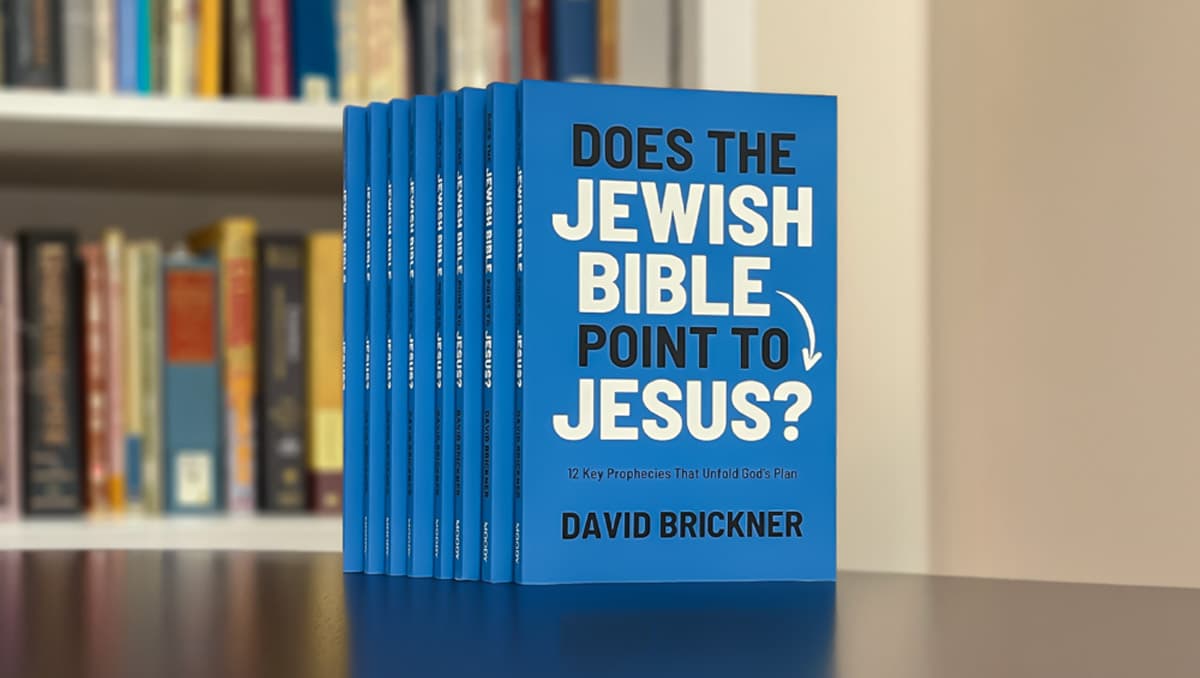
David Brickner unpacks this in his book Does the Jewish Bible Point to Jesus? He recalls a conversation with Lev,* a student at Arizona State University, who told him:
“You Christians have Jesus. We Jews have Moses.”
David, who comes from five generations of Jewish followers of Jesus, replied, “What if I told you I have Moses and Jesus?”
He continued his story:
“The Lord your God will raise up for you a prophet like me from
among you, from your brothers—it is to him you shall listen. . . .
And I will put my words in his mouth, and he shall speak to them all
that I command him. And whoever will not listen to my words that
he shall speak in my name, I myself will require it of him.’”
Then I told him a little about Yeshua [Jesus]: how he faithfully followed the Law of Moses. How he wasn’t interested in starting a new religion. How he came to fulfill God’s promises to Israel [including the promise of a prophet like Moses] and the nations.
David notes that Lev could see that following Moses does not necessarily close the door to Jesus, or vice versa. Brickner then points out that Jesus said: “If you believed Moses, you would believe me” (John 5:46).
Jesus directed that statement mainly to a group of local religious leaders in Galilee. They did not represent all the Jewish people at the time, as David notes:
Multitudes of Jewish people who saw the miracles Yeshua performed made the connection [to the Deuteronomy 18 passage]: “When the people saw the sign that he had done, they said, ‘This is indeed the Prophet who is to come into the world!’” (John 6:14 ESV). They were looking for the prophet Moses had promised, and here he was!
So, were they right in supposing that Jesus was that prophet? And if they were, why should it matter for us today?
The first question is the easier one to answer. Look at the qualifications David identifies for a prophet to be like Moses:
Miracle worker: None [in the Jewish Bible] compares to Moses for the sheer number or overall impact of miracles; from turning the water in Egypt to blood, to the parting of the Red Sea, to obtaining water from a rock, to name a few.
Relationship with God: The Scriptures highlight Moses’ unique relationship with God. “But since then there has not arisen in Israel a prophet like Moses, whom the Lord knew face to face” (Deut. 34:10).
Intercessor: The people tremble at the idea of hearing from God directly (Ex. 20:19). They beg Moses to be their “go-between.” Moses intercedes faithfully as he leads Israel through the wilderness for forty years. Not only does he pass on God’s words to the people, but Moses speaks to God on their behalf when the people go astray (Ex. 32:30–33).
Reflector of God’s glory: Moses’ face literally shines after his encounters with the Holy One. The people simply are not ready to see the kavod—the glorious bright light of the Lord—shining from Moses. Moses wears a veil over his face after his meetings with God. (See Ex. 34:29–35.)
David then compares and contrasts Jesus to Moses, drawing on several of the same themes. The following summary reflects key points:
Instructor: Moses delivered God’s law to our people to set us apart so that we could live by his standards. Jesus did not dismiss the law, but he emphasized the spirit and purpose of the law: to love God with all our heart and to love our neighbor as ourselves.
Miracle worker: Like Moses, Jesus performed miracles to demonstrate God’s power. Jesus was especially known for compassionate miracles: healing people, setting them free from demons, and even raising the dead.1 Jesus referred to his healing power as proof of his authority to forgive sin, 2something Moses never claimed. This would have been blasphemy if Jesus did not have an even closer relationship with God than Moses did.
Something in us insists that our plans will be better than whatever God has in mind.
Reflector of God’s glory: David makes a point to include Jesus’ unique relationship to God in an experience that sounds like what people saw on Moses’ face as he came down from Sinai. Jesus took two of his closest disciples up a mountain, where they saw a glorious light radiating from him. But not only was Jesus’ face illuminated, but “his clothes became white as light” (Matt.17:2). Then from a bright cloud came a voice, “This is my beloved Son, with whom I am well pleased; listen to him.” (Matt. 17:5 emphasis added).
So What?
Moses never claimed to be the last word when it comes to being Jewish or knowing the God of the Jewish people. The Deuteronomy prophecy was an amazing promise that God would speak to us clearly through a very special prophet after Moses was gone.
It’s easy to dismiss Jesus if we think of believing in him as somehow un-Jewish. But the Deuteronomy promise of a prophet like Moses is just one of many passages in the Jewish Bible that sound a lot like Jesus. If we look at what Jesus actually said and did, it’s hard to miss how very Jewish he is. So maybe that’s not the real issue.
Maybe the question of whether any of this matters for us as Jewish people today is not so different from the question that faces every human being: Do we truly want to hear from God?
We don’t necessarily know where hearing from God might lead us.
If we want to hear from God, then it’s important to consider whether Jesus is the prophet like Moses predicted in Deuteronomy—because if he is, God is speaking to us through him and wanting us to listen. But the question of whether we want to hear from God is not so easy for most of us to answer—because we don’t necessarily know where hearing from God might lead us. Even when God appointed Moses to lead our people out of Egypt, we see throughout the book of Exodus that many did a great deal of kvetching in between the miracles that he performed. We often thought about turning back to Egypt.
It was hard to trust God then. And it’s still hard for many of us to trust God now. But Jesus came to set us free from our distrust of God—and from the disastrous results of going our own way. And if Jesus is the prophet Moses said would speak words from God, he was giving us every reason to trust him when he said,
Truly, truly, I say to you, whoever hears my word and believes him who sent me has eternal life. He does not come into judgment but has passed from death to life…. So if the Son sets you free, you will be free indeed. (John 5:24; 8:36)
For reflection:
If God wanted to speak to you about your life, what would your response be:
- Wow, yes please!
- Uh oh . . .
- Nah, I’m good
* Name changed to protect privacy.
To find out more about God’s promises and why Jewish followers of Jesus believe he is the Messiah, check out Does the Jewish Bible Point to Jesus?: 12 Key Prophecies That Unfold God’s Plan at: See book on Amazon.com
Quotes and excerpts from “Does the Jewish Bible Point to Jesus” are used with permission from the publisher, Moody Press.
Endnotes
1. See, for example, Matt. 9:27–31; 14:15–21; Mark 1:23–28; Luke 7:11–18; John 5:1–9; 6:9–13.



Subscribe
Get new monthly articles and special invitations in your inbox!