My Big Fat White Plastic Hanukkah
All of our Jewish families in the neighborhood had the same Menorah.
by Rich Robinson |
These days, when celebrating Hanukkah, I notice that most of my friends use real candles. They add a warmth to the holiday, they are traditional, and most menorahs are made to hold actual candles.
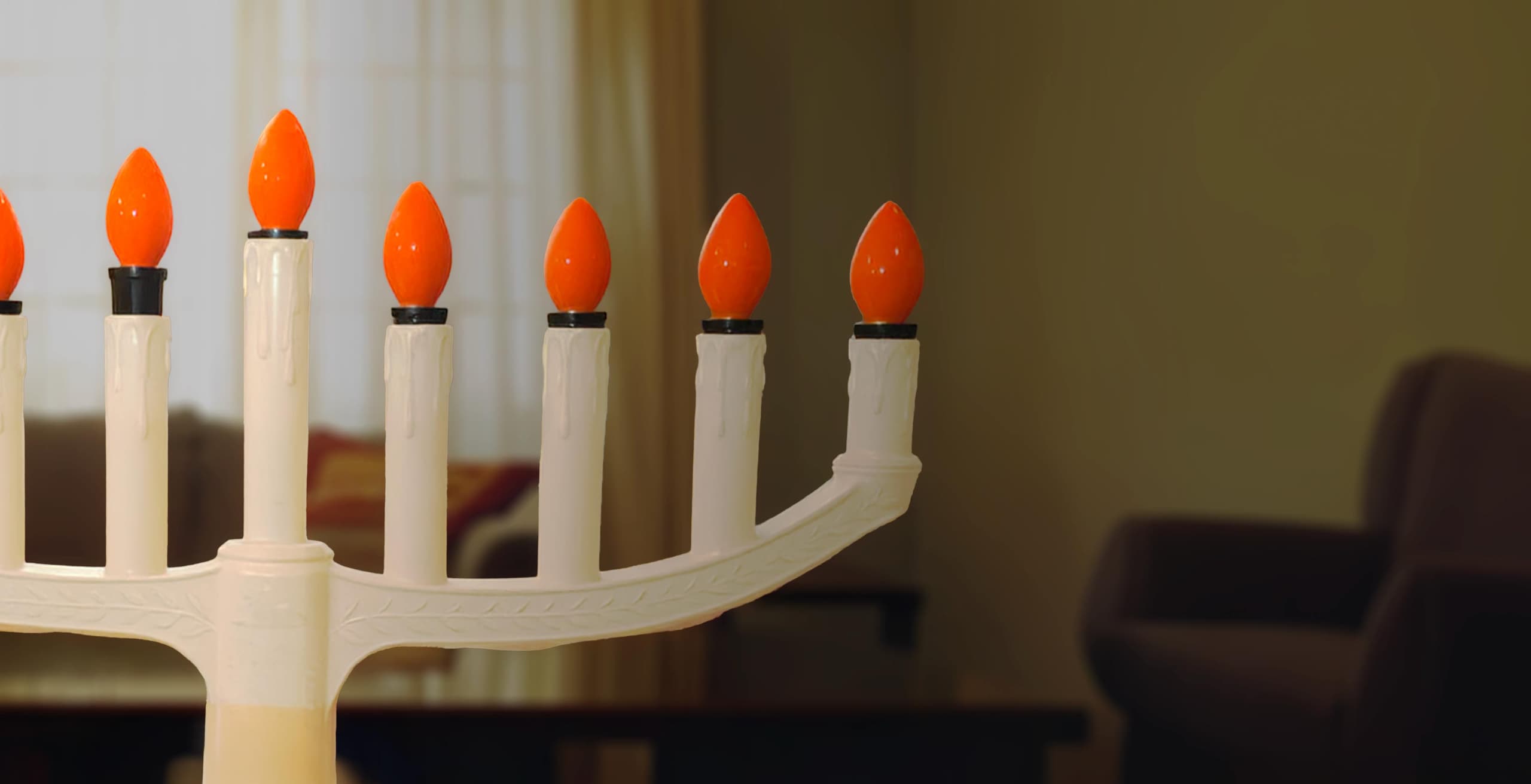
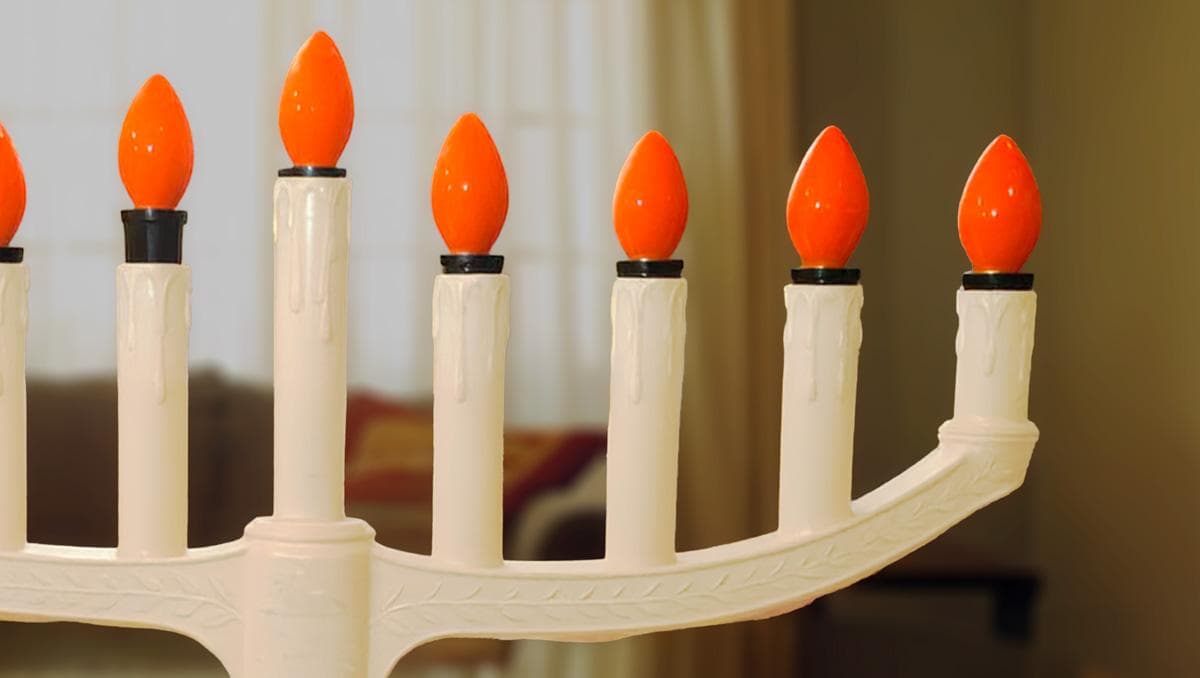
That wasn’t true while I was growing up! I’m from Brooklyn, New York—specifically, the neighborhood of Canarsie. I was a child of the 1960s. No real candles for us, or seemingly for any of the other Jews in Canarsie. No matches, no flames, no melted wax. Instead, we had a fairly large white plastic menorah with electric orange “candles” that screwed in. The shamash was still the highest light, positioned in the middle, but it too was electric and orange.
Our orange candles became a very public way of identifying ourselves.
Why a plastic menorah? Very simply, it allowed us to put our light in the window without catching the drapes on fire. Another advantage was that as we drove around the neighborhood, we could easily see who was Jewish and who wasn’t. We were all using the exact same menorah! It became a very public way of identifying ourselves.
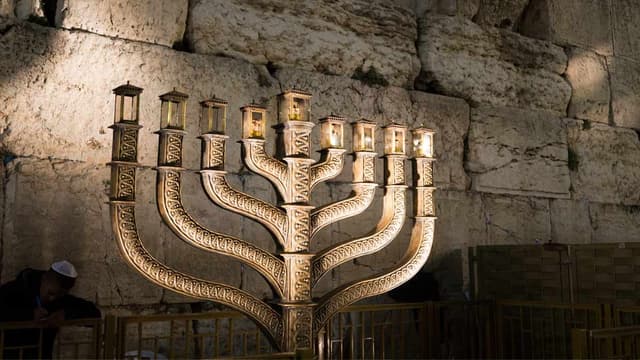
Of course, it was also ugly, really ugly. Today, I still use an electric menorah, mainly so I can keep it burning overnight without fearing that a fire will break out. But it’s a very nice looking one, brass-plated, with small white electric bulbs. Truth be told, it came from Bed, Bath and Beyond. God only knows where the ugly white menorah of my childhood came from. Well, God and my parents.
As a child, I didn’t mind the aesthetics. I always enjoyed Hanukkah and the chance to “light” an additional orange candle each night. The large number of menorahs in our neighborhood windows gave a sense of security, as they reminded us that so many Canarsians were Jewish. And the many lit menorahs in the windows of our brick row houses illuminated the neighborhood in a way different from the brighter, over-the-top Christmas lights of our non-Jewish neighbors. It was a quieter warmth that held the story of Hanukkah within its orange lights.
And I loved the Hanukkah story itself, with the bravery of the Maccabees and the miracle of the oil that burned for eight days until a fresh supply could be found. Eventually, I learned that the tale of the oil was a later legend, but who cared? It was an excuse to fry latkes (potato pancakes) in oil and remember that very miracle. My dad was the one who made the latkes, and he cooked them to golden-brown perfection.
And then there was the dreidel, the four-sided spinning top that landed on one of four Hebrew letters, though each letter actually stood for a Yiddish word. Like the white plastic menorah, the chocolate coins we would win were not exactly fit for royalty, or for the Maccabees either. They were cheaply produced of possibly the worst chocolate the world has ever seen. And the dreidels? Plastic, plastic, plastic. Historically, dreidels have been made of metal or wood, and today you can buy beautifully crafted dreidels from Jewish museums or gift shops. But the plastic dreidels and the cheap chocolate of the ’60’s went right along with our white plastic menorah.
In the movie The Graduate, someone sidles up to Dustin Hoffman and whispers: “Plastics.” In other words, that’s where the future lies and that’s where you’ll make a financial killing. Judging from my Canarsie Hanukkahs, maybe he was onto something.
Life doesn’t always need to be beautiful to be meaningful.
Is there a moral to the story? Maybe it’s that life doesn’t always need to be beautiful to be meaningful. The menorah was ugly, it was plastic, and whoever matched orange bulbs to white plastic needed to have their head examined. The dreidels were unimpressive too, and the chocolate gelt tasteless. But Hanukkah was not about the kind of menorah or dreidels we had. It was about family, light, Jews, and Maccabees. And who knows? Maybe the Maccabees weren’t such great lookers either. But their story—and the warmth of eight days of light—will resonate with us always.
Related Articles
Subscribe
Get new monthly articles and special invitations in your inbox!