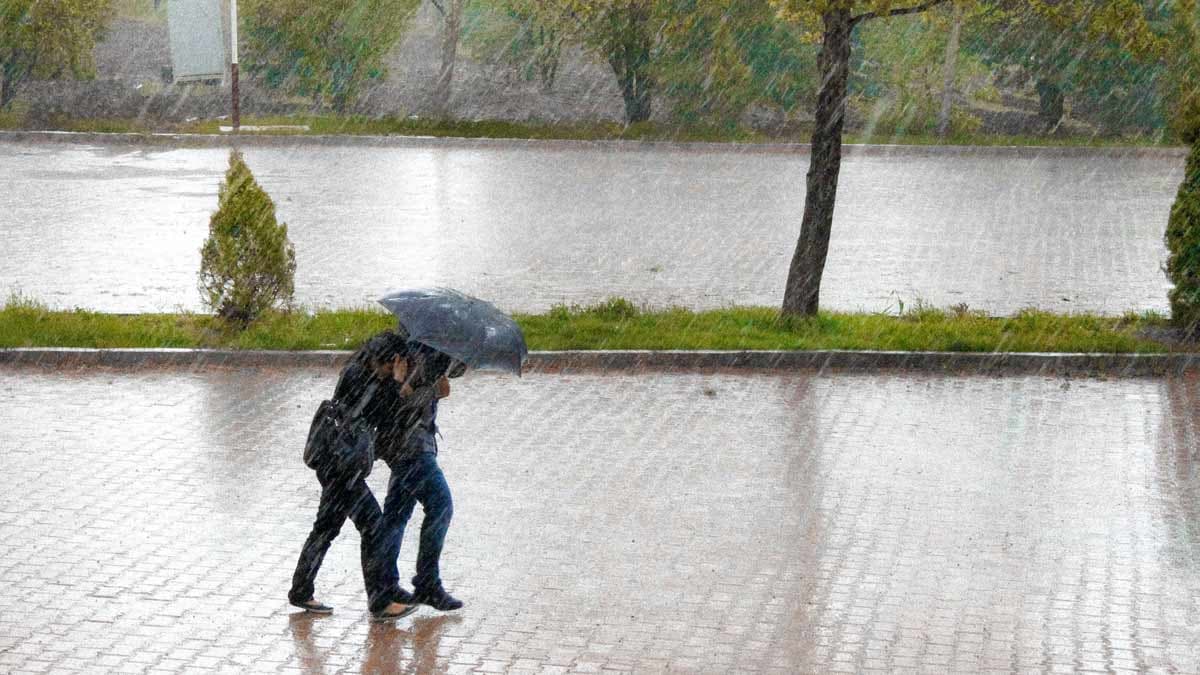
All About Rain: The Spiritual Meaning of Rain in the Bible
Into every life rain must fall, but what does the Bible say about it?
by Rich Robinson |
Biblical Words for Rain
Old Testament: The main Hebrew words for rain are matar and geshem.
Early Rains and Latter Rains in the Bible
There were two parts to the rainy season, so the early rain (autumn) gets its own name, yoreh, as does the late (spring) rain, called malqosh. Less frequently used terms describe varieties of rain, such as gentle showers versus heavy rains.
New Testament: The words for rain are broche (pronounced broh-khey) and huetos.
Importance of Watering in the Bible
The Old Testament world was primarily agricultural; yet the geographical area in which many Bible stories take place tends towards dryness, even drought. Therefore, rain was the lifeblood of sustenance. The early rain began the growth of the crop; the late rain brought that growth to fruition.
Rain in Scripture
The Bible has much to say about “rain” and related terms.
Positive references
The primary positive references to rain point to one of the chief blessings God promised to bestow, first, as a conditional blessing for obedience, but also as part of God’s “common grace.” But there are numerous other references to rain in the Bible.
- In Leviticus 26:4, God promises if Israel will obey Him: “Then I will give you rain in its season, the land shall yield its produce, and the trees of the field shall yield their fruit.”
- Exodus 16:4 says how God “rains” manna from heaven to provide for Israel in the wilderness, using the same word is the one that describes regular rain.
- Moses’ teaching, as given to him by God, is compared to life-giving rain in Deuteronomy 32:2: “Let my teaching drop as the rain, my speech distill as the dew.”
- In Proverbs 16:15, the favor of a human ruler, a king, is compared to rain.
- In Psalm 147:8, rain demonstrates the creative and sustaining power of God.
- Isaiah 45:8 compares salvation and righteousness to rain.
- Hosea 6:3 compares the knowledge of God and His personal presence to rain.
- In Zechariah 14:17, God promises rain in exchange for the nations offering their worship to Him in Jerusalem at the Feast of Tabernacles.
- In Matthew 5:45 and Acts 14:17 we see that rain is not only a covenant blessing for obedience; God graciously sends His rain to all.
- In the Feast of Tabernacles scenario in John 7, the final day of the feast included a magnificent “water show” at the Temple. This dramatic ceremony was a prayer acted out as a pageant, recognizing God’s gift of rain, and petitioning Him to continue to send the rains. Jesus took the occasion to connect with that hope for rain as He declared in v. 38, “He who believes in Me, as the Scripture has said, out of his heart will flow rivers of living water.” John explains that He spoke of the Holy Spirit, Who certainly brings us life and blessing as we allow Him to fill us.
- In Acts 14:15–17, Paul uses the universality of rainfall as a means of proclaiming the reality of the true God to the people of Lystra.
Negative references
The primary negative references to rain are the reverse side of the primary positive references: judgment for disobedience. But as with the positive references, there are various nuances.
- Genesis 7:4 speaks of Noah’s flood as a means of judgment: “For after seven more days I will cause it to rain on the earth forty days and forty nights, and I will destroy from the face of the earth all living things that I have made.”
- Deut. 11:17 and 1 Kings 8:35 show God will withhold rain from Israel for their disobedience to the covenant.
- The Lord “rains” down judgment as well as blessing: brimstone and fire on Sodom and Gomorrah (Gen. 19:24); hail on Egypt (Exod. 9:23); coals on the wicked (Ps. 11:6).
- Proverbs 25:14 compares false promises or empty boasts about being generous to clouds without rain. Jude 12 makes a similar comment about unethical teachers who seem to promise life but, like clouds without rain, are merely phantasms full of empty promises.
- Zechariah 14:17 records God’s warning that He will withhold rain from the nations that fail to offer worship to Him in Jerusalem at the Feast of Tabernacles.
- In contrast to God, idols cannot produce rain (Jer. 14:22).
- Rain represents the difficulties of life in Matt. 7:27, which can be navigated by following the teachings of Jesus.
Seven Applications of Bible Verses about Rain
Without rain life is mere existence, a struggle to survive, both physically and, by extension, spiritually.
We need to remember the agricultural and arid context in which the Bible was given in order to appreciate the power of rain imagery. When we do, even those of us who have an abundance of water and live in an industrial rather than an agricultural society can readily see these applications:
First Application
Obedience to God produces blessing in our lives; disobedience produces the opposite.
Because the conditional promise of rain as a blessing was given to particular people in a particular place,1 we can’t expect literal rain as an automatic exchange for obeying God. But we can expect obedience to bring spiritual blessings, refreshment and growth.
Second Application
Waiting for God’s blessings, including the return of Jesus, is an opportunity to exercise patience (James 5:7) and prayerfulness (James 5:18); both verses use rain imagery.
Third Application
In His common grace, God also blesses the entire human race with His goodness, including rain. God is continually giving sustaining gifts to those who honor Him as well as those who don’t. We can point to this as we share our faith.
Fourth Application
God’s Word is compared to rain because it is life-giving. If we neglect it, we are sure to experience spiritual drought. We who have free access to Scriptures have every reason to appreciate and take advantage of this blessing. And just as we pray for literal rain for drought-affected areas, or support various agencies that dig wells, etc., we can pray and support efforts to bring God’s Word to those who are spiritually dry and thirsty.
Fifth Application
We can be thankful for good teachers, and even political rulers who do what is right, as the Bible says that they too are like rain. They are blessings from God to enhance our lives and provide what we need to survive and flourish.
Sixth Application
Even the threat of unwanted rain, a metaphor for the storms of life, can help us examine our spiritual foundation. Yeshua is our solid Rock, but now and then we might need to weather a storm to make sure that we have built our lives on Him.
Seventh Application
A “thought project” for a rainy day might be to watch and listen to the rain and meditate on some of the Scriptures that compare righteousness, God’s presence, and salvation2 to rain. A rainy day might also be a good time to reflect on the scene in John 7, with its acted prayer for rain and Jesus’ words to the people. How can you pray for God’s salvation for others and blessing for yourself? Can you thank God for His gift of the Holy Spirit? How have you experienced the living water Jesus promised?
Endnotes
1. Excepting the promise to “the nations,” which is an apocalyptic end times prophecy.
2. The comparison between rain and salvation is unlike the promise of rain for obedience as there is nothing we can do to earn the blessing of salvation, and it is unlike common grace in that salvation has to be received on God’s terms.
Related Articles



Subscribe
Get new monthly articles and special invitations in your inbox!