A Tree and a Menorah, Side by Side
How one couple resolved the tensions between their holidays.
by Teddy Lema | December 11 2025
I finished setting up our new Christmas tree and squeezed between it and the TV to inspect my work. I’d known the tree was too big when I brought it home from the department store. But I couldn’t help myself—the kids would love it.
My wife Devorah smiled as she placed her hanukkiah on a little table, but her smile didn’t light up her face as usual. She was trying—trying to be gracious about the tree, but unsure. She walked over by my side. “Are you sure it’s not an idol?” she whispered.
Debbie had grown up in Israel and even attended a religious school. She never took part in anything like Christmas. So when she saw the tree for the first time, she worried about what it might symbolize.
It was perhaps easier for me to adjust to her holidays than it was for her to accept mine. Though I was raised Christian, I’m from Ethiopia—where Judaism’s roots run deep. Many of the traditions and rhythms of the Jewish calendar are familiar, even to Ethiopians who are not Jewish. So embracing her holidays, like Hanukkah, felt very natural for me.
But for Debbie, even the lights from the tree couldn’t clear up the tension she felt. And maybe she was also homesick. It sank in that we weren’t in Israel anymore when we couldn’t find sufganiyot. But I was determined to make her first Hanukkah in Canada special. After I called four different places, I found a Jewish bakery in the heart of Toronto that had exactly four doughnuts left—one each for Debbie and me, and one for each of our two kids. When I walked through the door with a piece of her childhood wrapped in a little bakery box, Debbie cried, “Nes gadol sham!” It really felt like our own Hanukkah miracle.
My faith told me that our two holidays could fit together.
I still wasn’t exactly sure how we would fit the stories of both our holidays together—especially in our tiny two-bedroom apartment! But my faith told me that it could fit together.
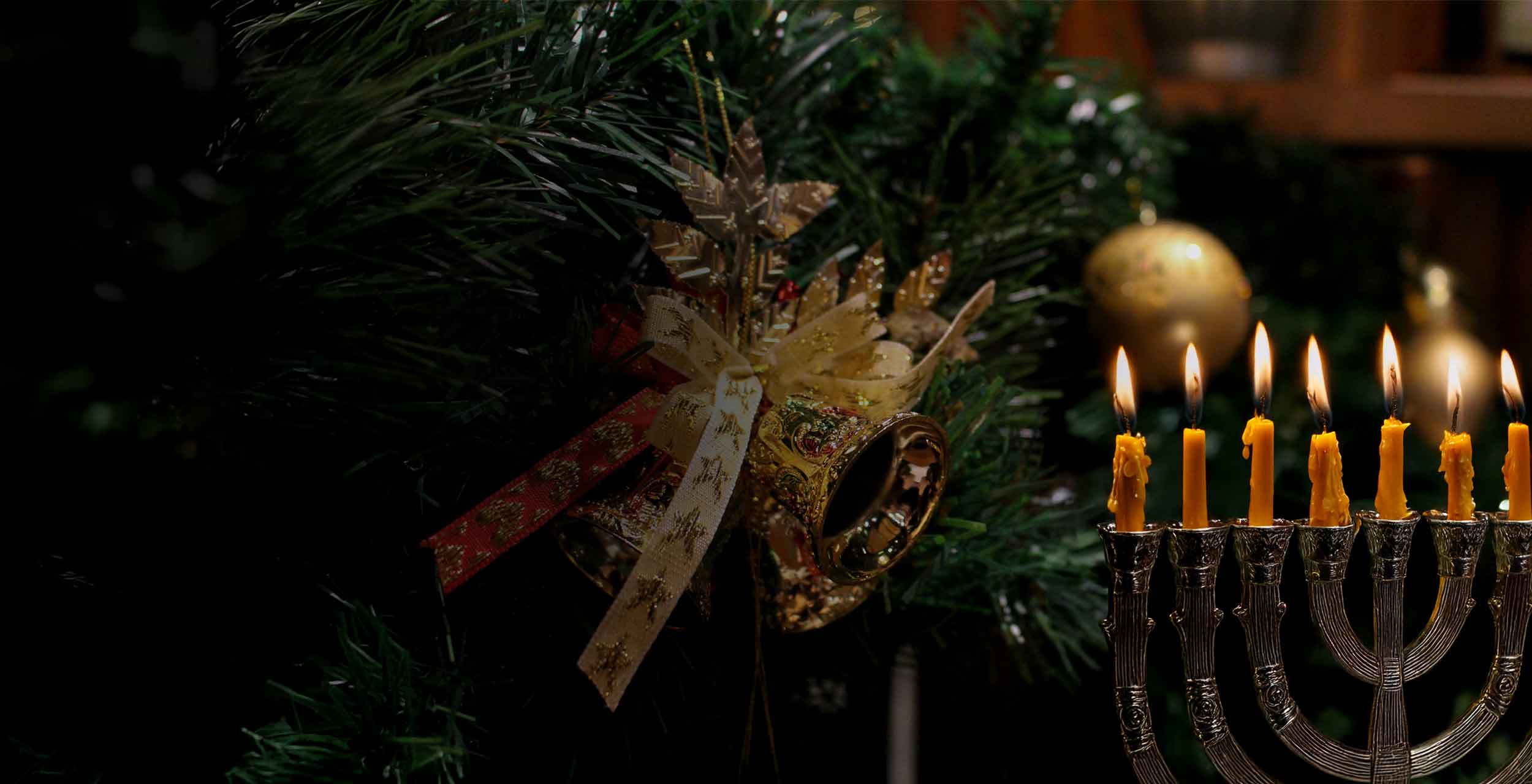
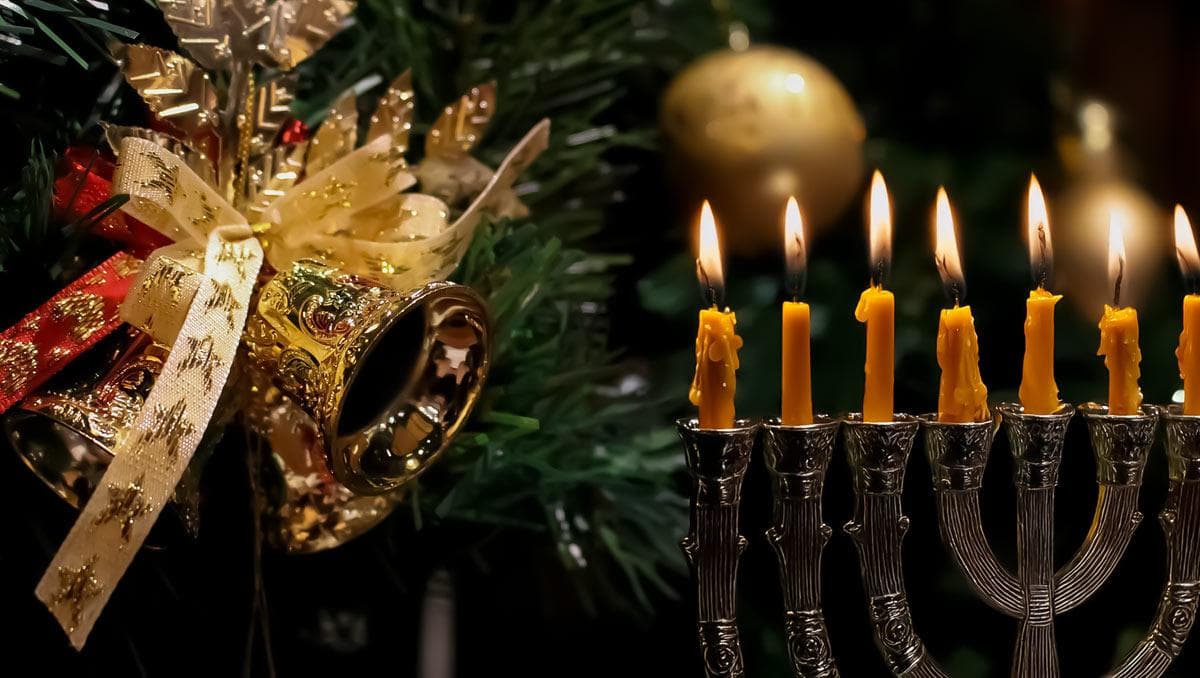
So while my family enjoyed their doughnuts, I took a picture of the living room, making sure to get both the tree and the menorah in the frame. When I showed it to my children, they were almost as delighted with the picture as they had been with the sufganiyot. Both sides of their culture, both sides of their heritage, sharing one screen. On impulse, I posted it with the caption, “This is how our family celebrates the holidays.” Maybe declaring what we wanted our journey to be was part of taking that journey.
We didn’t expect one Facebook post to spark so many questions from our friends online. Some people were confused to see symbols from two seemingly different faiths standing side by side. But their questions actually gave us an opportunity to connect with Debbie, and the opportunity to share about our faith in Yeshua (Jesus) with her Israeli family. Those questions actually opened the way to deeper connection with Debbie’s Israeli family. We were able to better explain our faith in Yeshua, which they’d struggled to understand.
And some of my friends had never before heard the story of when Jesus celebrated Hanukkah.
“Then came the Feast of Dedication at Jerusalem. It was winter, and Jesus was in the temple area walking in Solomon’s Colonnade,” it says in John 10:22–23.
I could almost imagine Jesus walking through our situation, present in our relationships, present in our holidays.
Those conversations have been part of the road to restoration for some of our relationships. And they’ve helped solidify for both Debbie and me the reasons why we want to raise our children this way—with the joy of being both.
We moved Debbie’s menorah from the table to the window so that we could share the light with passersby on the street below. Our children would run from the tree to the menorah and back again, admiring the light that came from both.
In the years since, the sufganiyot from our favorite Jewish bakery have become a beloved part of the season for us. And the children have stopped seeing the tree as “Dad’s” and the menorah as “Mom’s.” For them, our mishmash at the holidays is delightfully and wholly ours. My son even brought our menorah to school to share its light with his non-Jewish classmates.
At Hanukkah, light shows up in the darkness when God’s people least expect it.
And sharing that light has become very important in the last few years. The first Hanukkah was a story of light showing up in the darkness when God’s people least expected it. And I’ve seen firsthand how that story isn’t over.
Toronto has become an increasingly fearful place for its Jewish inhabitants in the last couple of years. Between antisemitic graffiti, threats, and even cases of violence, our homes and schools have not been the safe places they should be. Debbie and I even had to move apartments and transfer our children from one school to another to help protect them.
In Hanukkah of 2024, my family and I felt particularly vulnerable. The holiday came right on the heels of the first anniversary of the October 7 attacks in Israel. In a rush to do something, I reached out to some Christian leaders in the area with a request. I didn’t know what they would say—but when I asked them to accompany me to a local synagogue to show support during Hanukkah, seven of them said yes.
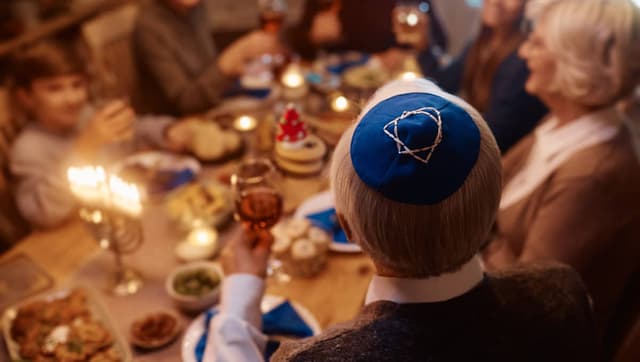
Those pastors not only showed up, but also showed love by serving food and even helping clean. I don’t know which was more meaningful—their help or their simple presence. These obviously Gentile men stayed and celebrated with us as the rabbi lit the menorah. We stood together and watched the light reflect off the windows of the packed synagogue.
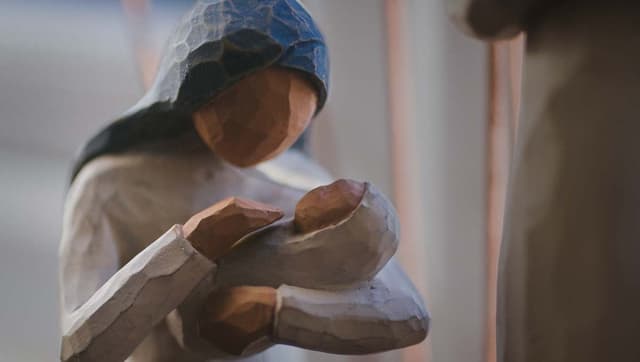
On the outside, the Christmas traditions that these men would go home to might not seem to have much in common with the scene of that night. But I remember the Nativity scenes that many of these pastors had set up in their homes. In a Nativity scene, the infant Jesus is traditionally positioned at the center while the other characters gather around to look at him.
Judaism has a similar idea of a central “character” in the menorah. It is called the shamash, or helper, candle. It stands in the middle of the menorah, unifying the candles—and it is used to light all the others. Some Jewish people say that the shamash is meant to symbolize the Messiah.
A handful of Christian pastors will come with me again to synagogue this Hanukkah. On the way home, I’ll pick up six jelly-filled doughnuts from our bakery instead of four (yes, the sweet owner of the shop wasn’t wrong). We’ll place a miniature Jesus at the center of a Nativity, and we’ll use the shamash to light all the other candles. We’ll pray that our Jewish Messiah will be at the center of our lives, as our symbols suggest.
And we’ll let his love light our way.
Learn more at JewishGentileCouples.com
Finding Harmony at Hanukkah and Christmas
Related Articles