
Jesus’ Circumcision: What His Entering the Covenant Tells Us
It was a sign and seal of what God intended to do for his people.
by Jeffrey Still | December 24 2025
Did you know that many Christians celebrate a bris every year? Of course, a brit milah is a celebration in Jewish culture. But Jesus must be the only Jewish boy whose bris is routinely celebrated around the world long after it happened—by hundreds of millions of non-Jews, no less!
Maybe you’ve only heard of the eighth day of Christmas as part of that old song where “my true love gave to me, eight maids-a-milking.” (Interesting gift idea there. Seems like that would be hard to wrap.)
But the eighth day of the traditional Christmas season celebrates something called the Feast of the Circumcision of Jesus. It’s still marked by churches that are more traditional. And the reason for this celebration is actually rooted deep in the core of Christian belief, which is based on some very Jewish ideas.
What Jesus’ followers celebrate every December is the idea that God came into the world he created. But this belief is not that God merely became a human being at random. He didn’t spin the globe and just happen to land his finger on a stable in Bethlehem.
The Christmas story, as penned by the Jewish authors of the New Testament, is much more particular; it’s about God writing himself into the long story of Israel.1 To Jesus’ first followers, the Messiah was not only God with us, as some Christmas hymns put it; he was God as one of us—namely, as a Jewish person born in Israel.
Why did Jesus’ first followers embrace this story? Because they were readers of the Tanakh, the Jewish Bible.
The Sign of the Covenant
A big theme in Judaism is the “covenant.” God made a covenant with Abraham, a covenant with the entire nation of Israel at Mount Sinai, and a covenant with King David. It is an obviously controversial claim to say that, according to the Hebrew Scriptures, the Messiah had to be God in person. But it seems like the only way that God’s promised covenants with Israel could be fulfilled. I’ll show you what I mean.
In the Torah, God created the world and created humanity to govern, fill, and protect it. He would be the loving King of the Universe, and they would be his people. But we rebelled against God and chose to go our own way. The human race soon descended into murder, idolatry, and evil (see Genesis chapters 1–11).
In response, God chose Abraham’s family from among all the nations to heal the relationship between humanity and God and get his creation project back on track.
Bris, which comes from the Hebrew word brit, meaning covenant.
God pulled Abraham out of an idolatrous, unjust, and often brutal world and promised him a family, a land, and an ongoing relationship. Israel was to be a seed of renewal through which all nations would be blessed (Genesis 12:1–3; Deuteronomy 4:6–8; Isaiah 49:6, 60:3).
Then, as a sign of the covenant, God told Abraham to circumcise all his male descendants to show that his family was chosen to be God’s own people. And to this day, a circumcision is called a bris, which comes from the Hebrew word brit, meaning covenant. And it remains an essential component of Judaism.
What was a covenant exactly?
I’ve thrown the word “covenant” around a lot, but what does it really mean?
A covenant was not a religious idea, at least not originally. It was a political contract that could be enacted by an ancient king to bind a new people group into his kingdom—establishing rule, loyalty, and territory under his authority.
Archeologists have found ancient covenants written on stone tablets. And in many ways, they follow the same format as the covenant that God defines with Israel in Deuteronomy.2 There, God:
- declared Israel to be his people
- granted them a homeland
- promised them protection from their enemies
- and promised blessings in abundance
Ancient covenants also included curses that would follow if the adopted people went off to serve other rulers. Deuteronomy 27–28 also includes curses that will follow if the people of Israel break the covenant by relapsing into pagan idolatry.
God is merciful and gracious, but he would not overlook evil and rebellion forever.
An Unusual Arrangement
Why did God make what was essentially a political contract with Israel? Because he was supposed to be their king, and they were supposed to be his people (Deuteronomy 33:1–5).
And that was extremely weird. All of ancient Israel’s neighbors had human kings—tyrant dictators who claimed a divine mandate to rule their people with an iron fist.
In fact, in pagan theology, only the kings and perhaps some elite priests were thought to have special favor with their gods. If you were a commoner, the only way to get the gods to bless you would be through sacrificial offerings. No commoner in those nations would ever write something like Psalm 145:
Adonai is gracious and compassionate, slow to anger and great in lovingkindness. Adonai is good to all. He has compassion on all His creatures. (Psalm 145:8–9, TLV)
Israel was unique in both its theology and politics. God would be their king, maintaining a direct, loving relationship with all of the people (Exodus 19:4–6). In that way, God’s covenant with Israel was both political and religious, speaking of love and relationships. In fact, Israel was not supposed to have a human king at all.
But how then did we ever get a King David?
A Change of Plans?
Just a few hundred years after the Exodus from Egypt, the leaders of Israel demanded a change. They wanted a human ruler, a warrior king who could lead them into battle against invading armies, which were a constant threat.
So, they came to their prophet and governor Samuel and demanded that he give them a human king, saying, “We want to be like the other nations…” (1 Samuel 8:20).
Enroll for free access to online courses and hear from seasoned ministers! You’ll learn the scriptural foundation and practical challenges of Jewish evangelism and be better equipped to share the love of Yeshua in a culturally appropriate way.

Samuel was upset. The people were intentionally breaking the covenant and rejecting the blueprint for Israel that God had promised in the covenant with Abraham. But God’s response was surprising.
Then Adonai said to Samuel, “Listen to the voice of the people in all that they say to you. For they have not rejected you, rather they have rejected me from being king over them.” (1 Sam 8:7 TLV)
God agreed to give Israel a human king because (like the rest of humanity) they had rejected God’s kingship.
Later, God chose David to be king and made a new, rather surprising covenant with him. God promised that David’s line would have an everlasting kingship (2 Sam 23:5; Psalm 89:3; Jeremiah 33:20–21).
Yet in this, God remained Israel’s true king. He did not relinquish his throne, but he chose the sons of David to sit on it (1 Chronicles 29:23).
That new promise seemed to get Israel back on track, at least for a while. Wise King Solomon succeeded David and built the first Temple in Jerusalem. It might have been the happy ending of the story. But the sons of David also broke faith.
First, wise King Solomon went astray, which ended with the nation breaking into two. Then followed a long succession of sons of David who, for the most part, led the people further into idolatry, rebellion, and injustice. These kings largely rejected God’s authority and his covenant.
For a long time, God was patient, but eventually, his judgment had to come. The Jewish people were exiled, and the line of David faded into obscurity.3
The covenants with Abraham and David looked broken beyond repair. But a promise of hope remained. God would send a new anointed son of David to lead the people—the Messiah. He would be the anointed son of David and the circumcised son of Abraham. And he would usher in the kingdom of God.
Let’s Do the Math
Now Israel had a conundrum.
According to God’s covenants with Abraham and Moses, God was supposed to be Israel’s king.4 Yet according to God’s covenant with David, a son of David needed to be Israel’s king. God had sealed these covenants to be everlasting promises (Genesis 17:7–8; 2 Samuel 7:12–16). You could say he’d staked his reputation on them.
I will establish my covenant between me and you and your offspring after you throughout their generations for an everlasting covenant … (Genesis 17:7)
And your house and your kingdom shall be made sure forever before me. Your throne shall be established forever. (2 Samuel 7:16)
Though they were designed to be permanent, both of those covenants were in jeopardy because neither the people of Israel nor the sons of David could seem to remain faithful to God for even a single generation. Instead of showing the nations how good it was to love and be loved by the Creator King of the Universe, they kept falling back into the idolatry of their Gentile pagan neighbors.
God came to his people in astonishing humility.
Fortunately, God himself remained faithful in the relationship. For he was long-suffering, patient, and determined to keep his promises even if Israel didn’t uphold its own end of the covenants. But how could that be?
What was impossible for the Torah—since it was weakened by human proclivities—God has done. (Adapted from Romans 8:3 TLV)5
The claim of Jesus’ first Jewish followers was that God had reconciled this problem for Israel (and the world) by doing something unprecedented and shocking.
- Humanity had rebelled against God. So, he had chosen Abraham’s family from among the nations as the source of world renewal.
- But the descendants of Abraham had rebelled against God. So, he had chosen David and his descendants to reboot the Israel project.
- But when the sons of David also rebelled, what else could God do? He would have to come down to earth himself and become a son of David, a child of Abraham, and a human being.
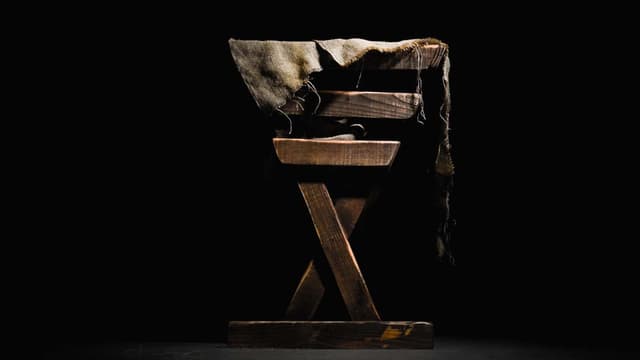
God came to his people in astonishing humility. The King of the Universe didn’t throw on some peasant clothes to walk among us for a day or two. He truly became a peasant—just another impoverished child, a son of Abraham born under the rule of foreign oppressors. And (Christian nativity scenes usually get this wrong) the only people who visited the newborn king’s cradle were a bunch of smelly shepherds working the night shift.
That’s amazing enough on its own. But the story becomes utterly shocking when it tells us that he was circumcised.
God Circumcised?!
Remember that covenants were supposed to be contracts between kings and their subjects, which included severe punishments for subjects who went astray.
So, when God became a Jewish baby boy and received circumcision (Luke 2:21), he put himself on the business end of his own covenant. He identified himself with his rebellious people and rebellious humanity. Therefore, he would also receive the consequences of their sins.
That’s why Jesus was born into his people’s poverty, and he grew up under the thumb of their foreign oppressors—who would eventually execute him. Identifying with his own people, he ended up taking on the results of our own sins, as depicted in the prophet Isaiah:
Surely he has borne our griefs
and carried our sorrows;yet we esteemed him stricken,
smitten by God, and afflicted.But he was pierced for our transgressions;
he was crushed for our iniquities;upon him was the chastisement that brought us peace,
and with his wounds we are healed.All we like sheep have gone astray;
we have turned—every one—to his own way;and the Lord has laid on him
the iniquity of us all. (Isaiah 53:4–6)
The circumcision of Jesus is a powerful sign and seal of what God intended to do for his people. Though they had rejected him, he would not reject them.
On the one hand, he would be the faithful son of David and Son of Abraham who would fulfill the human side of the covenant on behalf of his people (and the world), even to the point of death. On the other, he would identify himself with his people’s sins (and humanity’s sins) and receive the full curse of the covenant in their place.
God did all that so that he could be with us. The question for us, now, is a more pointed version of the question that the story of Genesis 2–3 left us with: Do we want to be with him?
Subscribe to our monthly email to learn about Jesus and why he still has Jewish followers.A resource for you
Endnotes
1 That does not mean at all that it is not a story for the whole world. See Genesis 12:1–3. From the start, what God was doing in and through the family of Abraham was a plan to redeem the whole world by (perhaps counterintuitively to us) starting over again with one very small family—just one man and one woman who were childless.
2 Thompson, J. A., “The Significance of the Ancient Near Eastern Treaty Pattern,” Tyndale House Bulletin (See PDF). Thompson also cites Exodus 19–24 as having this kind of ancient covenant/treaty pattern.
3 You can see this in the genealogy of Jesus in Matthew 1. The Genealogy starts with a lot of names you recognize from the Tanakh, especially Davd and his sons, the kings of Judah. But after the exile comes a list of names that nobody recognizes. David’s line had sort of gone dark in that era.
4 We can note that Deuteronomy 17:14–20 allows for a contingency plan where the people choose a human king. But this is not the ideal established in Genesis and Exodus. Also, it appears to foresee the events of Samuel 8 in which their choosing a king is described as their rejecting God’s kingship.
5 This is my modification of the TLV translation, which is: “What was impossible for the Torah—since it was weakened on account of the flesh—God has done.” The phrase “on account of the flesh” sounds weird to us. But in Paul’s vocabulary, it essentially means something like “due to the weakness of moral character that is inherent in the current state of embodied human existence.” That’s really hard to translate succinctly. But I think “weakened by human proclivities” gives a fairly good sense of it here.
Related Articles