Celebrating Our Heritage Through B’nei Mitzvah
This tradition has plenty of meaning for Jewish believers in Jesus.
Maybe you grew up in Judaism but you’re unsure what bar and bat mitzvah can look like in the context of faith in Jesus. Or maybe you’re not Jewish, but someone you love is, and you’d like to know what this coming-of-age ceremony means for them.
Either way, it’s worth considering how a b’nei mitzvah ceremony can help the young person connect more deeply to their faith and their heritage.
Inside modern American churches, we spend a lot of time talking about the individual’s faith in God. Meanwhile, Judaism has focused more on our collective journey—our peoplehood. A b’nei mitzvah can be a unique opportunity for a young person to do both: to begin finding their place in the Jewish story and to explore their own walk with God. In the process, we are joining with others who have done the same.
Connecting to Tradition
According to the Talmud,1 at age 13, a Jewish boy is obligated to observe the commandments of the Torah for himself.2 That expectation grew into the coming-of-age ceremony we know now as bar mitzvah during medieval times.
It was only expanded to include bat mitzvah (for young women) fairly recently. The first known Jewish girl to be given a bat mitzvah ceremony was Judith Kaplan in 1922.3 Judith’s father was, for his time, a visionary rabbi who believed that girls should be given the same opportunities as boys.
So, bar or bat mitzvah is a way to celebrate that the young person is grasping this opportunity—they’ve grown, they’ve learned the history of their people, and they are now ready to fulfill their role (spiritually speaking) as a Jewish adult.
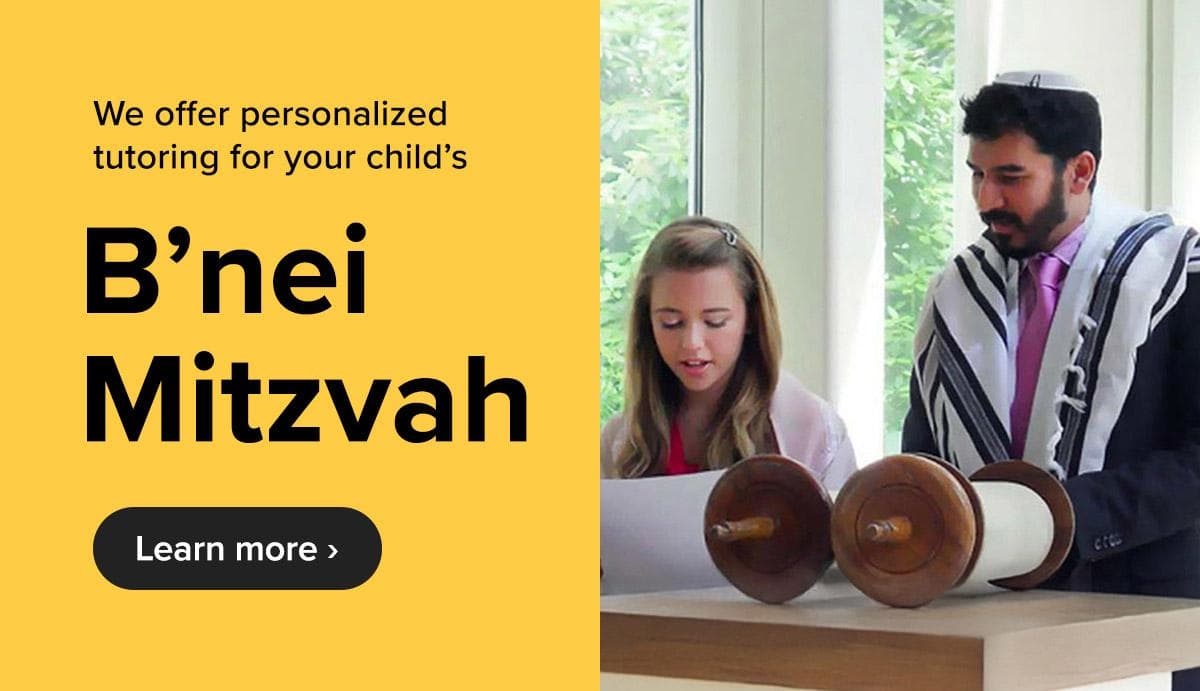
Though the ceremony is the beginning of a new era of responsibility for the young person, it’s also a culmination of something. By the time they stand at the bema (podium), they’ve typically had at least one year of training in Hebrew. They’ve learned how to prepare and deliver a drash (sermon). And in many cases, they’ve planned and performed a mitzvah (good deed). They’re joining in a long tradition of others who have done the same.
Once our children are grown, of course, they will choose their own path. It’s the hope of Jewish parents everywhere that their child’s bar or bat mitzvah will help set them on a good trajectory.
Engaging with Jewish Community
There is a growing pool of Jewish adults who consider themselves more “ish” than Jew, particularly among those who were raised secular. Rising rates of intermarriage, combined with the fact that we are more geographically spread out than we used to be, can make it easy to feel disconnected from our people.
So, passing on a sense of identity to the next generation doesn’t just happen! Engaging with our local Jewish communities is one way to be intentional about our identity.
As the young Jewish person steps into their community by becoming a bar or bat mitzvah, their community responds by coming around them. There is often a prayer for the young person, and some guests may provide written encouragements or other ways of blessing them. Though the ceremony itself can vary, you can count on the fact that there will be food and gifts afterward! It’s a time for the student to be affirmed, encouraged, and welcomed.
This can be especially important for young Jewish believers in Jesus. We sometimes have questions about our sense of Jewish identity. We don’t always feel we “fit in” with our traditional Jewish brothers and sisters. But b’nei mitzvah is one place where we can agree.
Honoring our Faith in Jesus
We know that for every young person who is raised in a household of faith, there comes a time when they must decide for themselves what they want to do with that faith.
When a bat or bar mitzvah candidate gives their drash, they may not only chant the blessings and read from the Hebrew Scriptures—if it’s a Messianic ceremony, they may also give a brief speech from the New Testament. Whichever portions of Scripture they are given, the student can remember that they are following in the footsteps of their Messiah.
When he was 12 years old, Jesus went with his parents to celebrate the Passover. On their way home from Jerusalem, his family realized he was missing. So they retraced their steps to search for him.
After three days they found him in the temple, sitting among the teachers, listening to them and asking them questions. And all who heard him were amazed at his understanding and his answers. (Luke 2:46–47)
He sat with the teachers. He studied the Scriptures. He asked questions and shared wisdom. In this well-loved story that is almost comical (how could Mary and Joseph lose track of the Messiah?), Jesus himself was leaning into the story of his people—the Jewish people.
A Long Walk
Someone has said that a life of faith is a long walk in the same direction.
B’nei mitzvah is a chance for Jewish teens to take one step—an important step—towards their faith and their heritage. Our people have a long history of walking with God. And though we haven’t always known how to trust him, he has never stopped shepherding us.
Find out more on our Youth and Family programs
Endnotes
1. The Talmud is a collection of rabbinic writings compiled after the destruction of the Second Temple.
2. “Bar Mitzvah,” Sefaria, accessed November 15, 2025.
3. “Judith Kaplan Celebrates First American Bat Mitzvah Ceremony,” Jewish Women’s Archive, accessed November 15, 2025.